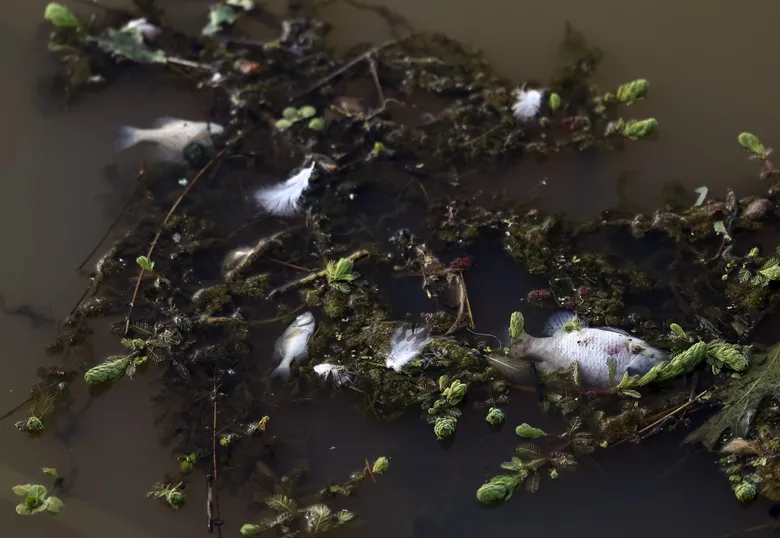
This week, reports from Washington State environmental agencies indicate that thousands of dead fish have been found around Longview following the Nippon Dynawave paper mill tank collapse and chemical release.
The failure of a massive storage tank holding more than 500,000 gallons of white liquor, a highly corrosive chemical used in paper production, caused extensive damage at the Longview facility. The incident claimed the lives of 11 workers and left several others injured. Investigators are continuing to examine the circumstances that led to the tank’s collapse.
Response crews have recovered 2,633 dead fish from drainage ditches surrounding the Longview incident area. Local reports have characterized the event as involving “thousands of dead fish” near the Nippon Dynawave facility. According to state officials, the fish deaths have been limited to ditch systems and nearby sloughs and have not affected the main channel of the Columbia River. The state continues to maintain that the Columbia River remains open and safe for fishing and recreational activities.
According to updates released this week:
- Response crews have recovered 2,226 different species of dead fish, as of June 1–2, with officials expecting the total to rise as additional waterways are inspected and flushed, once more decontamination can be done.
- Most fish were found in drainage ditches, sloughs, and waterways near the mill rather than in the main channel of the Columbia River, according to the
- Species reported among the dead included carp, catfish, bass, sunfish, peamouth chub, bridgelip sucker, redside shiner, and two hatchery salmon.
- The released “white liquor” (used in paper production and containing highly alkaline chemicals such as sodium hydroxide and sodium sulfide) can rapidly alter water chemistry and harm aquatic organisms.
At the same time, state officials reported that:
- pH levels entering the Columbia River had returned to normal,
- No ongoing contamination of the river was detected,
- Longview’s drinking water remained safe, and
- No confirmed fish or wildlife impacts had been documented in the Columbia River itself.
The fish kill is considered a significant localized ecological impact of the disaster, but investigators are still assessing the full extent of damage to wetlands, drainage systems, and nearby aquatic habitats.

Test